

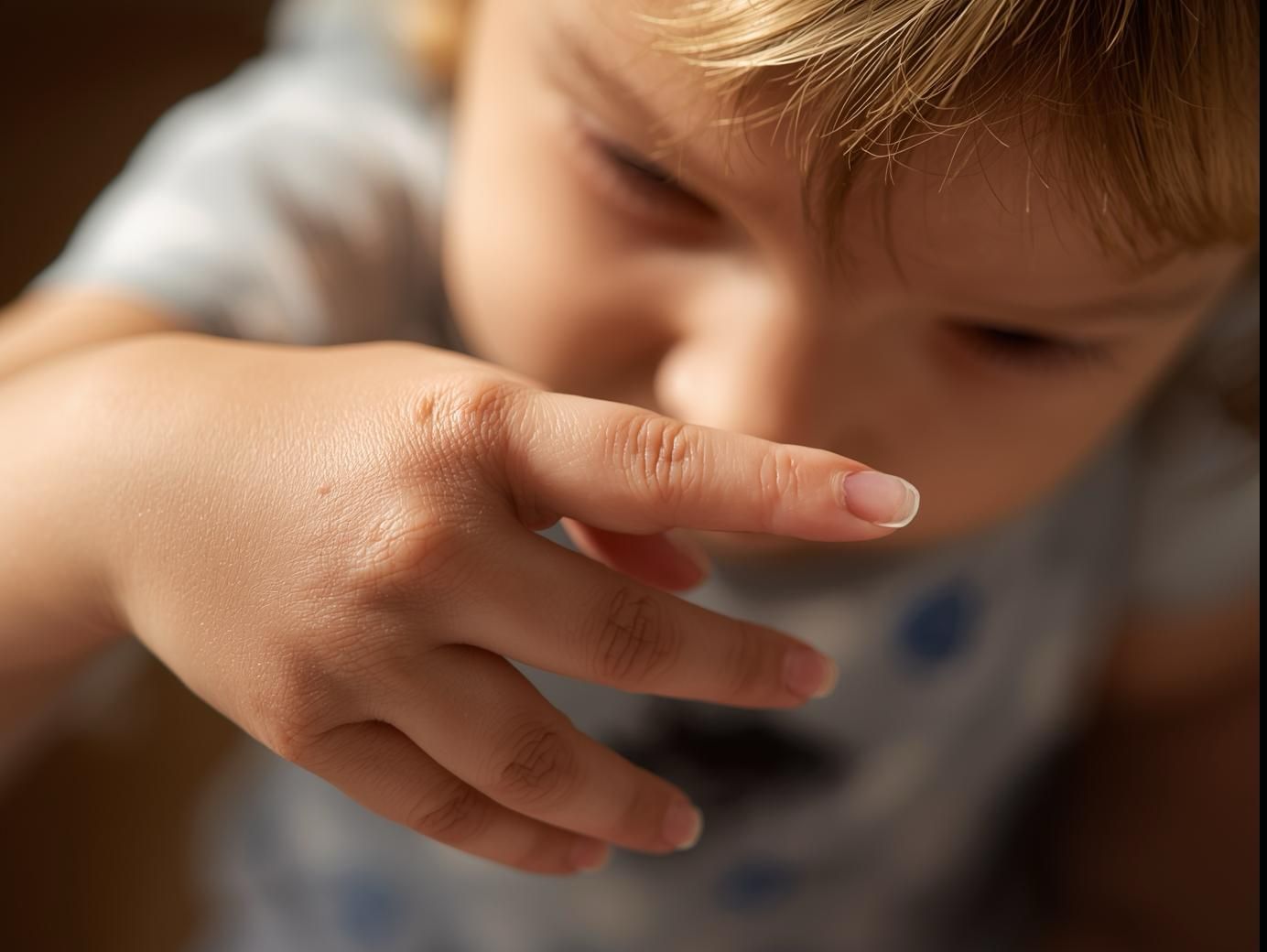
Skin picking OCD in children is a body-focused repetitive behavior characterized by intense urges to pick at skin on various parts of the body such as the face, lips, scalp, arms, or around the nails and cuticles, often leading to noticeable harm. Although it may appear to be a mere habit from an external viewpoint, inside, it represents a cycle of tension, overwhelming impulses, temporary relief, and subsequent feelings of shame or anxiety about the resulting marks and scars. This condition falls under the category of obsessive-compulsive and related disorders; many young individuals report sensations like “itchiness” or “unevenness,” thoughts that compel them to remove a bump or scab, or a “just-right” feeling that occurs only after picking. Recognizing this pattern can help parents understand that their child is not opting to engage in this behavior; rather, the behavior is compelling them.
Skin picking OCD in children can gradually dominate a child’s everyday life. A child might begin by occasionally picking at acne or dry skin, which can escalate to spending extended periods in front of a mirror looking for “imperfections,” running fingers over their scalp while doing homework, or picking at healing scabs while in bed. The relief from picking is fleeting, but the stress can persist throughout the day. Children may hide band-aids under their clothing, shy away from swimming pools or bright classrooms, and dread inquiries from peers. Parents often find themselves in a difficult position, torn between urging their child to “just stop” and wanting to safeguard their skin from further damage. Recognizing that the behavior stems from urges and anxiety rather than defiance can transform the focus from blame to support.
Skin picking OCD in children frequently coincides with other issues. Some children may also engage in hair pulling, cheek biting, or cuticle picking, while others might deal with perfectionism, ADHD, tics, or anxiety and low mood. Skin conditions such as eczema, keratosis pilaris, acne, or chapped lips can create “holdable” targets, perpetuating the cycle. Early and empathetic acknowledgment of the issue is crucial, as prolonged engagement in the habit makes it more automatic, further damaging a child’s self-esteem and social confidence.
SYMPTOMS OF SKIN PICKING OCD IN CHILDREN
Physiological symptoms:
Physiological symptoms: encompass both visible and hidden effects. Observable indications include redness, scabs, skin abrasions, scars, and changes in skin pigmentation. Constant picking can lead to pain, bleeding, infections like impetigo or cellulitis, and delayed healing. Children often experience premonitory sensations such as tingling, dryness, itching, or a “roughness” that urges them to smooth the area, leading to a feeling of tension release after they pick. Bedtime picking can disrupt sleep, while leaning over mirrors or obsessively focusing on their skin can cause headaches and muscle tension.
The psychological symptoms:
The psychological symptoms: tend to be the most significant. Many children experience deep shame, guilt, and fear of judgment, which leads them to avoid friends, sports, and photographs. Some may hide mirrors, while others spend excessive time scrutinizing their skin. Anxiety often escalates during school events or family gatherings, as they perceive blemishes as evidence of failure. Perfectionistic thoughts, such as “this bump has to be flat,” or “I can’t focus until this is smooth”, perpetuate the behavior.
TYPES OF SKIN PICKING OCD IN CHILDREN
Clinically, different types of picking can emerge, often overlapping. Focused picking is intentional, as the child targets specific areas to alleviate tension or to “correct” imperfections, sometimes following rituals such as selecting certain scabs. Automatic picking occurs unconsciously during activities like reading or gaming until the child notices blood on their finger. Sensory-based picking is prompted by tactile sensations, such as rough areas or flakes. Affective picking is influenced by emotions such as boredom, stress, anger, or sadness. The body parts involved can vary, including the face, lips, scalp, arms, back, and cuticles, with nighttime or mirror-related picking being common subtypes. Understanding these patterns is crucial because treatment strategies are tailored to them.
CAUSES OF SKIN PICKING OCD IN CHILDREN
Understanding the causes of skin picking OCD in children involves a complex interplay of vulnerabilities and learning experiences.
Psychological factors:
Psychological factors: such as heightened sensitivity to bodily sensations, perfectionism regarding appearance, intolerance of uncertainty and challenges in expressing emotions can create predispositions. This behavior is reinforced over time: picking provides immediate relief, which teaches the child to repeat the action when discomfort arises.
Social factors:
Social factors: experiences like teasing related to acne, comments about the need to appear presentable, and family expectations can intensify pressure. While well-meaning actions, such as allowing a child to skip school photographs, purchasing long sleeves even in hot weather, or removing mirrors from the home, might offer temporary comfort, they can inadvertently reinforce the notion that revealing one’s skin is dangerous.
Environmental factors:
Environmental factors: including puberty, academic stress, frequent close-up selfies, harsh lighting, dry weather, and the availability of tools like magnifying mirrors and tweezers, can also elevate risk.
TREATMENT OF SKIN PICKING OCD IN CHILDREN
Assessment requires both medical and psychological evaluations. Clinicians investigate triggers, environments, times of day, levels of awareness, and emotional responses before and after skin picking, alongside inquiries about infections and pain. They may recommend dermatology consultations for wound management and to rule out conditions like dermatitis or prurigo. The objective is to create a nonjudgmental understanding of the behavior as a learned cycle, allowing interventions to address specific connections in that cycle. Children often feel relief when adults recognize that the behavior stems from a learned response, rather than a character flaw like laziness or vanity.
Cognitive Behavioral Therapy (CBT):
Cognitive Behavioral Therapy (CBT): serves as the main treatment approach. Effective CBT starts with psychoeducation, enabling the child and their family to identify the issue without stigma and to understand the interconnections between thoughts, feelings, sensations, and behaviors. Functional analysis helps pinpoint “high-risk” scenarios, such as pre-school mirror time, post-dinner homework, or using a phone in bed, and identifies the self-talk that occurs during those situations. Cognitive work gently challenges beliefs, such as the idea that leaving the skin alone will result in it looking worse all day, and promotes more balanced thoughts, like recognizing that healing is preferable to picking and that they can manage the urge for a short period. A crucial element of CBT for skin picking OCD in children is Habit Reversal Training (HRT), an approach that focuses on increasing awareness and teaching alternative responses. Awareness training enables children to recognize and label the initial subtle movements that precede picking, while the competing response is an action performed for at least one minute when the urge arises, such as clenching fists, using a stress ball, knitting, doodling with both hands, sitting on their hands, or wearing a soft finger sleeve after school. Additionally, stimulus control strategies enhance HRT by altering the environment, implementing non-magnifying mirrors, applying fingertip bandages during homework, adding soft lighting, and keeping picking tools out of reach.
Exposure and Response Prevention (ERP):
Exposure and Response Prevention (ERP): ERP involves a structured series of challenges that trigger the urge, such as viewing a close-up image without zooming, standing in front of a mirror for two minutes without touching, or going to bed with a healing scab exposed. It emphasizes response prevention by encouraging children to tolerate discomfort without engaging in picking behavior. They learn that anxiety and sensory impulses have a natural rise and fall. ERP also addresses avoidance behaviors, including wearing short sleeves to school, participating in the school play, or taking unfiltered selfies, all while resisting the urge to cover or check. For children who pick automatically, ERP may involve “urge surfing” during homework with a timer and an alternative response on standby. For those with focused picking behavior, ERP can combine mirror exposure with guided self-talk and time-limited routines.
Acceptance and Commitment Therapy (ACT):
Acceptance and Commitment Therapy (ACT): complements the plan by transforming the child’s relationship with their urges and marks. Instead of resisting thoughts like “I must fix this,” ACT encourages defusion, allowing the child to see these thoughts as mere constructs of the mind rather than commands, and promotes acceptance of uncomfortable sensations as manageable. The focus on personal values serves as a guiding principle, including aspirations like being a good friend, playing sports, enjoying art class, and sleeping well. Promoting self-compassion helps replace feelings of shame with the understanding that “I am learning a new skill; mistakes are part of the process.”
Wellness coaching:
Wellness coaching: serves as an overarching principle and a life philosophy that integrates therapy. Maintaining a consistent sleep schedule can minimize late-night picking, movement breaks alleviate restlessness built during school hours, and balanced nutrition and hydration support both skin health and emotional well-being. Digital hygiene is also significant, as limiting the use of mirror-like front cameras, keeping phones out of bed, and utilizing apps that dim or restrict access to social media during high-risk picking times can help protect focus. Additionally, wellness coaching reshapes identity: the child is not defined as “a picker,” but rather identified as an athlete, a reader, a sibling, or a friend cultivating resilience.
Personality dynamics:
Personality dynamics: Skin picking OCD in children tend to be detail-oriented, and driven; these traits can be advantageous when properly guided. A brief “personality dynamics course” for families can clarify how perfectionism and a strong sense of responsibility may become rigid under stress, while fostering flexibility, humor, and calculated risk-taking can help alleviate these pressures. Parents are encouraged to acknowledge the process instead of focusing solely on outcomes related to appearance, and to teach skills rather than resorting to rescuing with repeated reminders or constant oversight, which can be counterproductive.
Creating effective coping strategies:
Creating effective coping strategies: transforms understanding into everyday achievements. Children can assemble a personal “coping kit” that includes items like a fidget ring, a smooth worry stone, a stress ball, lip balm for dry areas, and a card outlining three steps: recognizing the urge, taking a deep breath and squeezing, and selecting a value-driven action. Developing emotional skills complements this approach, children learn to identify their feelings, assess their intensity, and select a regulation tool such as a quick burst of movement, listening to music, or a brief check-in with a parent. Schools can assist by offering discreet accommodations, such as allowing a stress ball on the desk, seating the child away from mirrors, or providing brief walk passes without drawing attention.
Improving emotional and mental well-being:
Improving emotional and mental well-being: The larger, lasting goal is to improve emotional and mental well-being. Therapy directly addresses feelings of shame, teaching children to communicate with a reliable adult about difficult days and to treat their skin gently instead of engaging in harmful habits like picking. Family sessions focus on reducing avoidance and criticism in favor of validation, skills development, and stable routines. Reestablishing social connections through playdates, clubs, and sports helps rebuild confidence, shifting the focus from appearance to a broader sense of self. When anxiety or depression is present, it is addressed concurrently with the compulsive behavior, diminishing the emotional triggers behind those urges.
SUCCESS STORY
Aarav, a 10-year-old from Pune, studying in 5th grade. He struggled with constant skin picking that left marks on his face and arms since the last 8 months. His parents had initially taken him to a dermatologist in Pune and he was given some skin creams for healing the marks, but these creams were not helpful in controlling the picking behaviour of Aarav, which was increasing with time. The parents then decided to consult Mr. Shyam Gupta at Emotion of life. Through CBT, he learned to notice his triggers and practiced Habit Reversal with stress balls and fidget toys. With ERP, he faced mirrors without picking, while ACT taught him to accept urges and focus on values like playing cricket and spending time with friends. Wellness coaching improved his sleep, routines, and hobbies, while a personality dynamics approach reframed his sensitivity as a strength. Over time, he built healthy coping mechanisms, his skin began to heal, and his confidence and emotional well-being grew, showing that recovery is truly possible.
FAQ
- How is skin picking OCD in children different from normal picking at scabs?
Most children occasionally pick at a scab or scratch dry skin. In skin picking OCD in children, the behavior is frequent, difficult to control, and causes distress, visible damage, or social withdrawal. Children often feel shame and want to stop but can’t.
Why do children pick their skin even when it hurts?
Children describe feeling an urge, itch, or tension that builds up until they pick. Picking brings brief relief but then leads to guilt and more scanning of the skin. Over time, the child learns that picking reduces discomfort, which keeps the cycle going.
Can skin picking OCD in children cause physical health problems?
Yes. It can lead to open wounds, infections, scarring, delayed healing, and even skin discoloration. If a child uses tools or picks at acne, risk of infection increases.
How is skin picking OCD in children treated?
Effective treatments at Emotion of life include CBT with Habit Reversal Training, ERP, and ACT. Alongside therapy, wellness coaching, healthy coping strategies, and emotional health support are crucial.
Will my child always have this problem?
Not necessarily. With early treatment, consistent therapy, and supportive family involvement, many children significantly reduce their picking or stop altogether. Even if urges remain, kids can learn to manage them successfully.
16 step process of OCD Recovery and Cure Program
1. Initial interaction via call or WhatsApp to know the client’s OCD scenario & willingness of recovery mindset.
2. The first consultation aims to understand the client’s OCD patterns, subtype, complexity, severity.
3. A comprehensive psychological assessment covering the OCD spectrum, emotional and mental health, personality dynamics, quality of life, functional analysis, unconscious mind processing, and present complexity as hidden motives, drives, needs, dominant emotions, and other qualitative & quantitative check. .
4. Development of a clear problem statement by the client, followed by a family feedback session to collect inputs and the client’s OCD-related challenges.
5. Creating and developing a structured work plan with defined goals and a clear timeline.
6. Initiation Therapy Foundation Course (6 days)
7. A. Customized CBT and ERP one-on-one sessions conducted daily from Monday to Friday as part of the therapeutic intervention, over a duration of 4 to 6 months.
7. B. Weekly family sessions conducted every Saturday throughout the course of the treatment.
8. Ongoing weekly and monthly progress reviews to assess development & treatment adjustment if needed.
9. Midterm evaluation in the 3rd month to assess progress and compare with expected initial projected outcomes in the initial phase.
10. Course correction in personality dynamics, with focused work on improving mental health and enhancing emotional well-being in the fourth month.
11. Relapse management focused on building resilience against the obsessional patterns that were primary challenges at the beginning of the program.
12. End-term evaluation to ensure all recovery milestones have been achieved and to assess overall treatment outcomes.
13. Final declaration of OCD recovery through a three-layer validation process involving the therapist, the client’s family, and a comprehensive psychological assessment.
14. Post-recovery follow-up sessions conducted weekly on Saturdays for a duration of 6 months to ensure sustained progress and prevent relapse.
15. Guiding throughout the 6-month follow-up to ensure the client remains stable and receives the necessary assistance to prevent 0% relapse.
16. Reaching a cured state by successfully completing 6 months of weekly follow-ups and maintaining OCD recovery, leading to the final declaration of OCD cure—marked by a 360° validation from all stakeholders, including the therapist, family, and psychological assessments.
CONCLUSION
In conclusion, skin picking OCD in children is prevalent, distressing, and very much a part of the human experience, but it is also very treatable. A clear and empathetic explanation helps understand why a child continues to touch the very areas they want to heal: the child has associated picking with immediate relief, even if it results in later pain. An integrated approach combining CBT with Habit Reversal and stimulus control, tailored ERP for addressing urges and mirror exposure, ACT for fostering acceptance and values, wellness coaching as a guiding principle, a personality-dynamics approach that emphasizes strengths, practical coping strategies and collaboration from family and school equips children with effective tools. As the control over urges diminishes and the skin begins to recover, the child’s world opens up once more: they can participate in games, actively engage in class, and smile for photographs. Most importantly, they learn a valuable lesson that transcends any physical imperfection, recognizing a challenging emotion, choosing constructive actions, and creating a life rooted in values rather than compulsions.