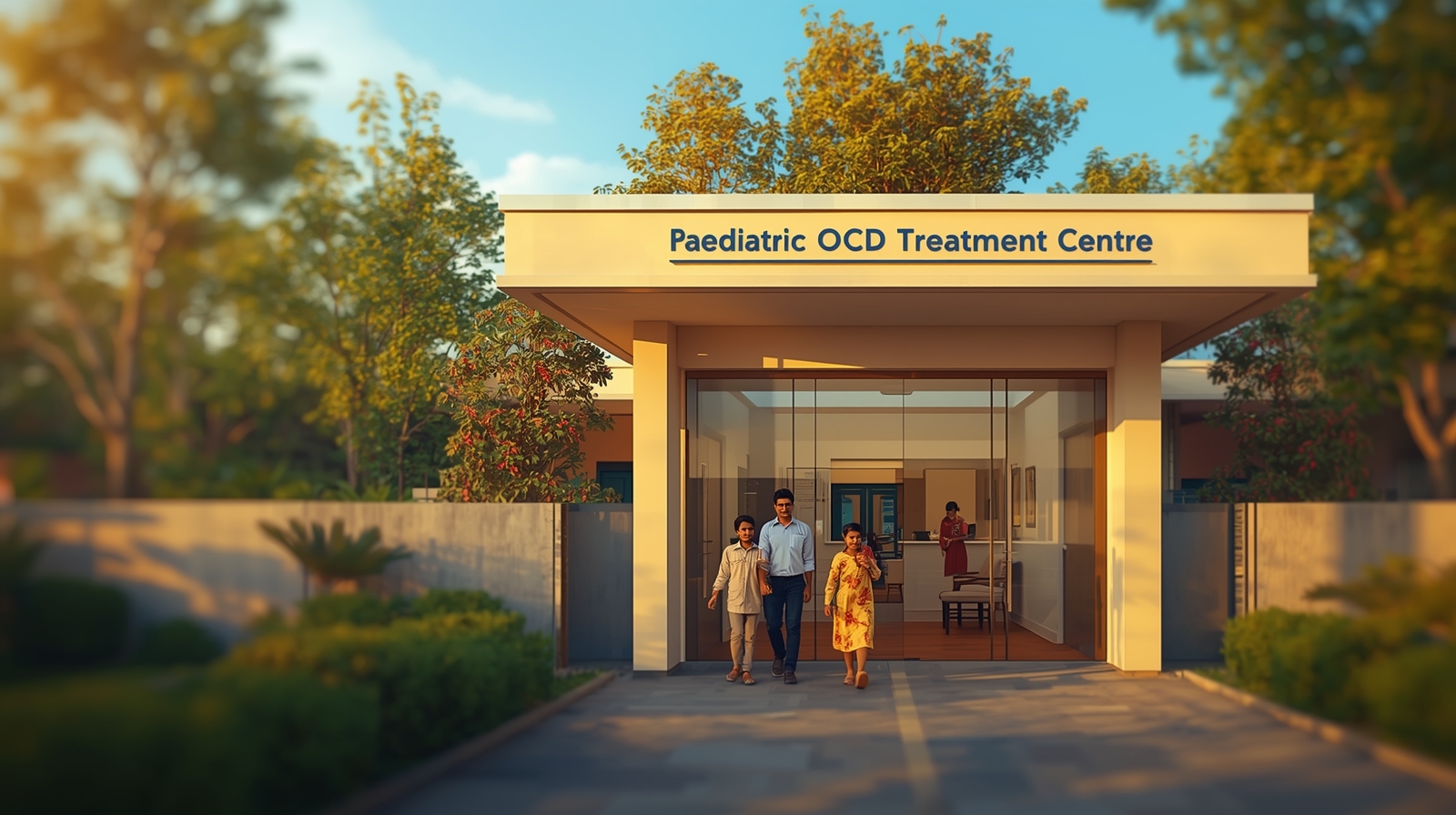
Paediatric OCD Treatment Centre
Paediatric OCD Treatment Centre ,Paediatric obsessive-compulsive disorder (OCD) can deeply impact a child’s emotional world, academic journey, and confidence. Parents often feel helpless watching their child trapped in repetitive thoughts and rituals. At Emotion of Life, under the expert guidance of OCD Specialists Shyam Gupta and Pratibha Gupta, we specialize in helping children and adolescents overcome OCD completely — without medication.
Paediatric OCD Treatment Centre in India
Emotion of Life has its own absolute unique 360° transformational approach to OCD Treatment. Our Paediatric OCD Recovery and Cure Program blends evidence-based Cognitive Behaviour Therapy (CBT) and Exposure and Response Prevention (ERP) with warm emotional support, family inclusion, and continuous therapist involvement. Over the years, our passionate multidisciplinary team has helped hundreds of children across India regain freedom, happiness, and self-belief — many of whom remain relapse-free years after recovery.
Why Choose Emotion of Life for Paediatric OCD?
At Emotion of Life as the best Paediatric OCD Treatment Centre in India, our treatment philosophy centres around understanding the child first — their fears, their strengths, and their environment. Our approach ensures every child feels safe, understood, and empowered throughout their healing journey.
1. Child-Centred CBT and ERP
Our therapy sessions are tailored to suit children and pre-teens. Through play-based exposure, creative thought exercises, and age-appropriate dialogue, we help children face fears gradually and regain confidence step by step.
2. Family-Inclusive Treatment
Parents and caregivers are active participants in our recovery plan and day-to-day updates on challenges and progress monitoring. We train families to avoid accommodation behaviours, build confidence in exposure tasks, and reinforce positive coping mechanisms at home.
3. Non-Pharmacological Focus
At Emotion of Life, recovery happens naturally through structured CBT and ERP. We help the brain learn new patterns, allowing children to gain control without the side effects or dependency concerns of medication.
4. Multidisciplinary Team Effort as Paediatric OCD Treatment Centre
Led by Shyam Gupta and Pratibha Gupta, our team includes trained child psychologists, ERP specialists, wellness coaches, and family therapists who work collectively to track every child’s progress.
5. Relapse Prevention During and After Recovery
Every child leaves our program equipped with strong relapse prevention skills, ensuring sustained recovery even years later.
Our Treatment Framework as Paediatric OCD Treatment Centre
1. Comprehensive Assessment
We begin with a detailed evaluation involving clinical interviews, child-friendly assessments, and collaboration with schools to understand the child’s functioning across all areas of life.
2. Individualized Exposure Plans
Each exposure plan is uniquely designed based on the child’s specific obsessions and compulsions — for example, contamination fears, checking rituals, or intrusive thoughts.
3. Coping Skills Training
Children learn to manage anxiety using mindfulness, relaxation, and rational thinking. They learn that thoughts are not facts — a life-changing realization for many.
4. Parent Coaching
Parents receive hands-on guidance on how to respond calmly during exposure, support the child’s ERP tasks, and maintain structure at home.
5. School Partnership
We collaborate with teachers and school counsellors to maintain the child’s academic progress while they undergo therapy.
Unique Features of Emotion of Life’s Paediatric OCD Recovery and Cure Program
- Daily sessions (online or onsite in Agra) for continuous progress
- 24×7 therapist and family support during critical exposure stages
- Proactive family engagement model ensuring consistent progress at home
- Strong progress tracking system with weekly measurable outcomes
- Long-term relapse prevention training
- Emotion regulation and resilience-building modules
- Dedicated WhatsApp and video check-ins for parents and children
16 Steps of the Paediatric OCD Recovery and Cure Program as Paediatric OCD Treatment Centre
- Initial clinical assessment and diagnostic clarification
- Psychoeducation for child and family
- Building therapeutic trust and motivation
- Identifying obsessional triggers and compulsions
- Developing individualized ERP hierarchy
- Gradual exposure initiation
- Thought labelling and cognitive restructuring
- Anxiety tolerance and mindfulness training
- Response prevention coaching
- Parent behaviour modification sessions
- Daily tracking of thoughts and rituals
- Family involvement in ERP reinforcement
- School collaboration for support and adjustments
- Relapse prevention planning
- Graduation phase — exposure mastery
- Post-recovery follow-up and long-term monitoring
These 16 structured steps ensure that every child not only recovers from OCD but also develops emotional resilience for the future.
Success Stories of Complete OCD Recovery
1. Vihan, 12 years, Pune – Religious OCD, Reassurance Seeking Compulsion, Harm OCD, Tics, OCD of Tapping
Vihan couldn’t touch objects without washing hands multiple times. He avoided school, fearing germs. Through four months of daily ERP and supportive family coaching, he regained confidence. It’s been 3 years since recovery — no relapse, full participation in sports and studies.
2. Jia, 13 years, Pathankot – Religious OCD and Contamination OCD, Sensory Motor OCD
Jia was terrified she might offend God with “bad thoughts.” Her intrusive thoughts made her anxious during prayers. After structured CBT and ERP, she learned to face the thoughts calmly. Two years post-recovery — no compulsions, active in school cultural activities.
3. Jay, 13 years, Bengaluru – Chronic Checking/Rechecking OCD, Contamination OCD, OCD of Perfection
Jay’s OCD made him wash hands up to 100 times daily. His parents were exhausted. Under Emotion of Life’s daily therapy plan, his compulsions reduced in weeks. Today, 4 years later, he remains OCD-free and plays cricket fearlessly.
4. Aryan, 12 years, Mumbai – Contamination OCD, Tics, Involuntary Body Movement, Harm OCD, Ritualistic Behaviour, OCD of Tapping
Aryan feared he might harm his parents or offend God with unwanted thoughts. With gradual ERP, he learned to detach from intrusive fears. Now in his second year of high school — completely cured, confident, and emotionally stable.
5. Sakshi, 15 years, Hyderabad – Contamination, Sexual Intrusive Thought, Religious OCD
Sakshi’s OCD disrupted her studies and friendships. Her recovery under Shyam Gupta and Pratibha Gupta’s guidance became a turning point. She completed her therapy two years ago and has had zero relapse since. Today she mentors others struggling with OCD online.
Client Reviews After Successful OCD Recovery avaing Emotion of Life services as best Paediatric OCD Treatment Centre
- Parent of Vihan (Pune): “Emotion of Life changed our son’s life. He is happy, confident, and free from OCD. We are forever grateful.”
- Mother of Jia (Pathankot): “The team at Emotion of Life supported us 24×7. Jia is now a joyful, prayerful girl without fear.”
- Father of Jay (Bengaluru): “We were amazed at the daily progress tracking and personal attention. It felt like a family healing together.”
- Parent of Aryan (Mumbai): “No relapse in 3 years! The guidance from Shyam Gupta and Pratibha Gupta was life-changing.”
- Mother of Sakshi (Hyderabad): “Our daughter not only recovered but became emotionally stronger. No medicines, only therapy and care.”
What to Expect at Your First Visit
- A child-friendly, comforting environment that reduces anxiety.
- Clear explanation of what OCD is and how CBT/ERP helps.
- Realistic recovery plan created jointly with parents and child.
- Regular reviews, goal tracking, and therapist-family collaboration.
Evidence-Informed Outcomes
- Over 95% of children show significant improvement in 12–16 weeks and complete recovery around 20–24 weeks depending on OCD complexity.
- Most children reach complete recovery without relapse in 2–4 years follow-up and reach the OCD cure state.
- Early intervention ensures stronger long-term emotional health.
Getting Started with Emotion of Life
- Consultation: Book a Paediatric OCD assessment to determine suitability for the program.
- Family Readiness: At least one caregiver must commit to daily engagement and home support.
- Personalized Plan: The team outlines a customized ERP plan and timeline.
FAQ – Frequently Asked Questions on Paediatric OCD Treatment Without Medicine
1. Is medication necessary for treating children’s OCD?
Not always. Most children recover fully through CBT and ERP alone. At Emotion of Life, we focus on therapy-based recovery first.
2. How long does treatment take?
Every child is unique, but most families notice strong improvements within 16–24 weeks of consistent therapy.
3. What if my child refuses therapy or exposures?
Our therapists use play therapy, creative engagement, and motivational techniques to build comfort before exposure work begins.
4. Can siblings be involved in therapy?
Yes. Sibling awareness helps reduce triggers and builds a supportive environment.
5. How do you manage relapse risk?
We train both child and family in relapse prevention strategies and offer long-term follow-up.
6. What is the role of parents during treatment?
Parents play a central role. They attend parent coaching sessions, monitor progress, and encourage exposure practice at home.
7. Can therapy be done online?
Absolutely. Emotion of Life offers both online and onsite sessions (Agra center) with equal effectiveness.
Conclusion: A Future Beyond OCD as Best Paediatric OCD Treatment Centre in India
At Emotion of Life, we believe every child deserves a peaceful mind and a confident smile. The compassionate leadership of Shyam Gupta and Pratibha Gupta, combined with their team’s dedication, daily therapy sessions, and family-first approach, makes complete recovery possible — without medication.
Hundreds of children have already reclaimed their lives, proving that with the right therapy, love, and guidance — OCD cure is possible.
Book Now | Review | OCD Types | Our Experts | Success Stories| Contact Us| MyPsychologist